.svg "Braintrust")

Built on Trust and Transparency
AI Hiring Compliance, Fairness & Ethics at Braintrust AIR
Braintrust AIR is built on the principles of security, fairness, and transparency. From SOC 2 certification and GDPR compliance to human oversight and regular bias testing, our AI hiring platform safeguards both organizations and candidates, ensuring every hiring decision is ethical, explainable, and compliant.














.png?width=106&height=26&name=Vector%20(3).png)





In the age of AI-powered recruiting, trust is non-negotiable. Braintrust AIR was built from the ground up to meet the highest global standards for compliance, fairness, and data security.
Braintrust AIR’s infrastructure is SOC 2 certified, ISO 27001 and NIST 800-30 aligned, and hosted on encrypted AWS architecture that undergoes regular penetration testing and risk assessment. Every data point, from resumes to interview recordings, is safeguarded under GDPR and DPA frameworks, with flexible data residency in the EU and full right-to-deletion controls.
What sets Braintrust AIR apart is its ethical AI design. Beyond compliance, Braintrust AIR promotes ethical AI governance. Our human-in-the-loop system ensures that recruiters, not algorithms, make final decisions. Each AI-assisted interview is fully reviewable with video and standardized scorecards, reinforcing transparency and accountability.
We go beyond compliance by conducting third-party bias audits, testing for adverse impact, and using explainable AI to ensure decision logic is traceable and fair. Combined with role-based access controls (RBAC), multi-factor authentication (MFA), and single sign-on (SSO), AIR provides complete governance across every hiring workflow.
Compliance shouldn’t be just about a checklist; it’s about trust. We believe ethical AI hiring should empower people, protect privacy, and promote diversity. That’s why we go beyond regulations to set a new benchmark for secure, fair, and transparent recruiting.
Comparison: How Braintrust AIR Stands Apart
When evaluating AI hiring tools, most solutions focus on automation speed, but few prioritize fairness, auditability, and human oversight. Here’s how Braintrust AIR compares:
| Feature | Typical AI Hiring Tools | Braintrust AIR |
|---|---|---|
| Security | Basic encryption, limited access controls | SOC 2 certified, ISO/NIST aligned, full encryption |
| Data Privacy | Global storage, limited GDPR compliance | GDPR/DPA compliant, EU data residency, deletion on request |
| Bias Auditing | Rarely audited, opaque scoring | Regular third-party bias audits and explainable scoring |
| Human Oversight | Fully automated decision-making | Human-in-the-loop final evaluations |
| Transparency | Limited visibility into AI logic | Video reviews, standardized rubrics, audit logs |
| Ethical Use | Candidates often unaware of AI involvement | Fully disclosed, opt-in AI interviews |
What to Look for in a Compliant & Ethical AI Hiring Platform
Verified Security Standards
SOC 2 certification and ISO/NIST alignment demonstrate a vendor’s commitment to enterprise-level data protection.
Transparent AI Decisions
Choose tools that allow you to review and explain AI-driven outcomes to maintain accountability.
Human Oversight
Ensure recruiters retain the final decision, supported, not replaced, by AI.
Bias Testing & Auditing
Regular third-party bias assessments and fairness testing are key for equitable hiring results.
Privacy & Data Control
GDPR/DPA compliance, encryption, and data deletion policies protect both candidates and organizations.
Ethical AI Communication
Candidates should always know when AI is being used, because transparency builds trust and compliance.
Start Hiring Smarter with Braintrust AIR

Experience AI-powered hiring that adapts to your goals: from high-volume recruiting to specialized technical roles, Braintrust AIR helps you hire faster and more effectively.

How to Choose an AI Recruiting Solution with Enterprise-Grade compliance and ethical standards

What compliance certifications should I look for in an AI hiring platform?
Start by confirming that the vendor meets recognized information security and data privacy standards, such as SOC 2, ISO 27001, and GDPR. These certifications demonstrate that the platform has undergone third-party verification for data protection, confidentiality, and operational reliability. A compliant vendor should also provide transparency reports and be willing to share details about their internal data governance practices.
Why does SOC 2 matter for AI recruiting tools?
SOC 2 compliance is important because it evaluates how a company manages data based on five key principles: security, availability, processing integrity, confidentiality, and privacy. For organizations using AI in hiring, SOC 2 ensures that sensitive candidate data is protected at every stage, from storage to deletion. It also indicates that the vendor conducts ongoing audits and risk assessments to identify and mitigate vulnerabilities over time.
How can I verify if a tool’s AI models are unbiased?
Verifying bias requires both technical testing and independent evaluation. Ask vendors whether they conduct third-party bias audits and whether they use adverse impact testing across different demographic groups. Reliable platforms will also employ explainable AI models, where decision logic can be reviewed and justified to ensure that candidates are being evaluated based on skills and experience, not gender, ethnicity, or background.
What role does human oversight play in ethical AI hiring?
Human oversight ensures that final hiring decisions remain accountable to people, not algorithms. While AI can process large datasets and highlight candidate matches efficiently, human recruiters must interpret these results, apply context, and make the ultimate call. This balance between automation and empathy ensures fairness, transparency, and trust throughout the recruitment process.
How does GDPR compliance protect candidates?
GDPR gives individuals control over how their data is collected, processed, and stored. For AI recruiting tools, this means candidates can request data deletion, limit usage, or choose not to participate in AI-based evaluations. Complying with GDPR not only protects candidate rights but also strengthens an organization’s reputation for responsible data handling and ethical technology use.
Can AI tools ensure fairness without transparency?
Transparency is a cornerstone of fairness in AI systems. Without visibility into how an algorithm makes decisions, organizations cannot identify or correct bias, nor can they defend those decisions legally or ethically. Ethical vendors provide model documentation, scoring explanations, and audit trails that show exactly how outcomes were reached.
How often should vendors perform risk assessments?
Security and bias risk assessments should be performed at least annually, though best-in-class providers do them continuously. These reviews help identify new vulnerabilities, shifts in data sources, and potential compliance gaps as the AI evolves. Organizations should also evaluate how vendors respond to identified risks, proactive remediation is a sign of maturity and accountability.
Are candidates informed about AI involvement in their recruitment process?
Ethical AI use demands full disclosure and consent. Candidates should always know when AI tools are being used to assess them and be provided with the option to opt in or out. This transparency builds trust and ensures compliance with privacy laws, especially in jurisdictions where candidate consent is a legal requirement.
What does “human-in-the-loop” really mean?
“Human-in-the-loop” describes a system where AI supports human decision-making rather than replacing it. This approach ensures that recruiters can review, question, or override AI-generated recommendations. It blends the efficiency of automation with human judgment, maintaining accountability while benefiting from AI’s analytical strengths.
How can I evaluate AI vendors on ethics?
Evaluating ethical practices involves more than comparing features, it’s about assessing transparency, accountability, and oversight. Look for vendors who publish their AI ethics principles, undergo third-party audits, and provide clear documentation on model governance. Ethical AI providers should demonstrate not only compliance but also a proactive commitment to fairness, inclusion, and explainability.
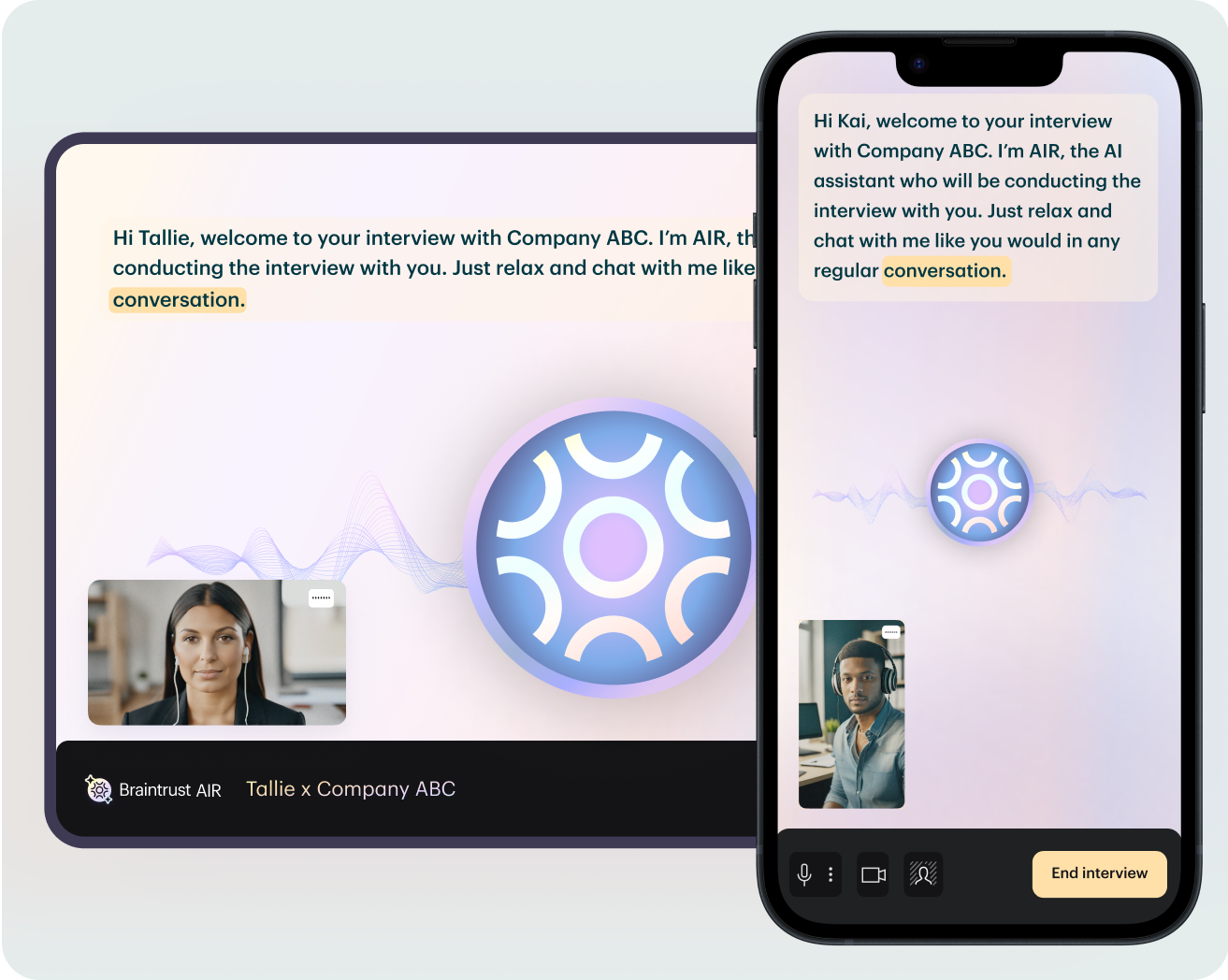
Braintrust AIR, your new automated hiring engine
Connect your ATS
Braintrust AIR instantly scans your existing applicants, no sourcing required.
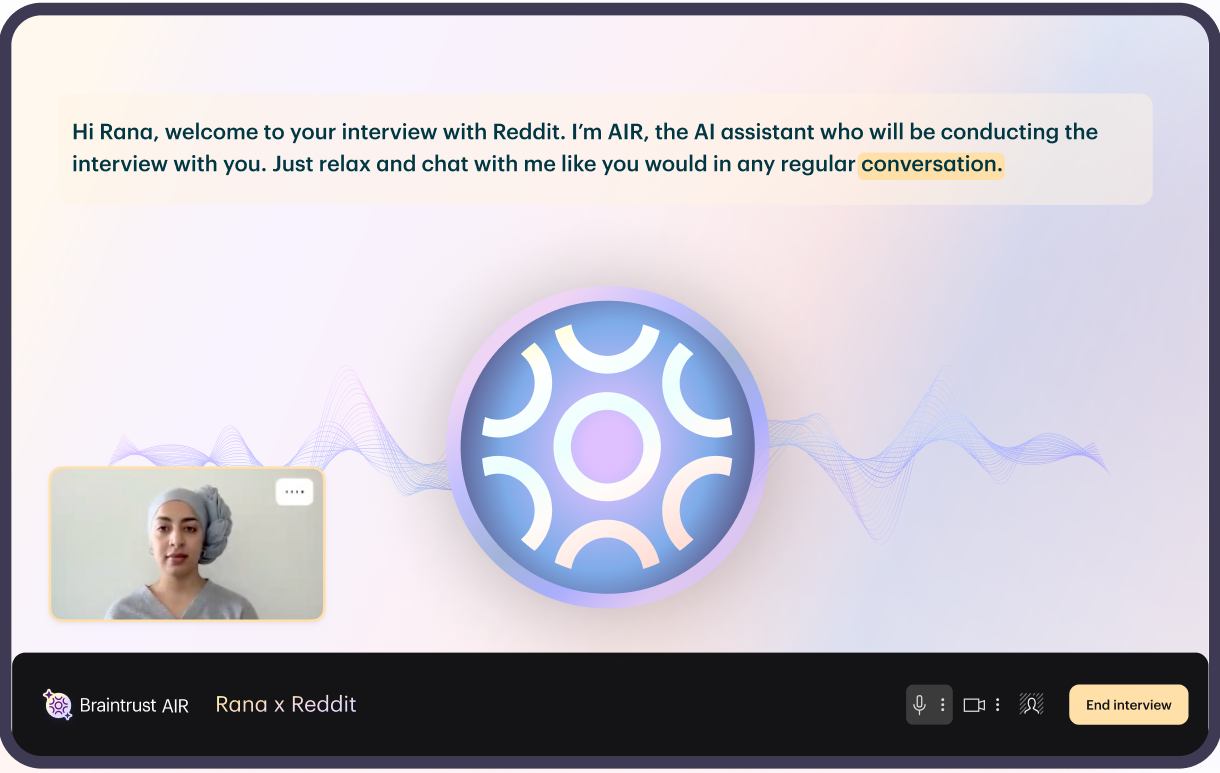
Interview automatically
Every qualified candidate completes an AI-led video interview.
Score instantly
Braintrust AIR evaluates responses on communication, problem-solving, and technical fit, fully customizable to your scoring rubrics.
Review and advance
Recruiters receive structured scorecards and candidate videos to move the best forward, fast.

Frequently Asked Questions
What is SOC 2 and why is it important for AI recruiting platforms?
SOC 2 is a framework developed by the American Institute of CPAs (AICPA) to evaluate how organizations manage customer data based on five trust principles: security, availability, processing integrity, confidentiality, and privacy. For AI recruiting tools, SOC 2 certification means candidate and company data are protected through robust policies and verified third-party audits. It’s one of the most reliable indicators of a platform’s maturity in security and governance.
How does AI bias occur in recruiting tools?
AI bias often arises from biased training data or poorly designed algorithms. If a model learns from historical hiring data that reflects existing inequalities, it can replicate or amplify those biases. To mitigate this, ethical AI vendors use diverse datasets, bias-detection models, and ongoing audits to measure and correct unfair patterns in candidate evaluations.
What are the key components of fair AI hiring practices?
Fair AI hiring practices include transparency, bias mitigation, human oversight, and accountability. Organizations must ensure that their AI systems are explainable, that decision logic can be reviewed, and that final judgments involve a human element. Regular bias testing and clear communication with candidates further reinforce fairness and trust.
How can companies maintain data privacy in AI-driven hiring?
Data privacy requires strict adherence to encryption standards, data residency laws, and user consent protocols. Companies should store candidate data securely, only collect what’s necessary, and delete it upon request. Implementing GDPR-compliant workflows helps protect both the organization from regulatory risk and candidates from unauthorized data use.
Why is transparency critical in AI recruitment systems?
Transparency allows recruiters and candidates to understand how and why decisions are made. It’s essential for compliance with emerging AI regulations and for maintaining trust in automated systems. Transparent AI tools enable audits, accountability, and informed feedback loops, all necessary to ensure responsible use.
How do third-party audits improve the fairness of AI tools?
Independent audits bring an objective perspective to evaluating bias, accuracy, and data handling. By having an external entity assess the system’s outcomes and compliance, organizations can validate their fairness claims. Third-party reviews also signal a commitment to openness and continuous improvement in ethical AI development.
What is the difference between compliance and ethics in AI hiring?
Compliance ensures adherence to laws and regulations, while ethics focuses on doing what’s right, even beyond legal requirements. A company can be compliant but still fall short ethically if its algorithms lack fairness or transparency. The best AI hiring platforms pursue both, meeting regulatory standards while building systems that respect human dignity and inclusion.
How can AI hiring tools promote diversity and inclusion?
Properly designed AI tools can reduce bias by focusing on objective criteria like skills and experience rather than demographic factors. They can help surface candidates who might otherwise be overlooked, broadening access to opportunities. However, to truly support diversity, these systems must be continuously monitored and adjusted for fairness across different groups.
What are the risks of using non-compliant AI recruiting software?
Using tools that lack proper security and fairness controls can lead to data breaches, discrimination claims, and regulatory penalties. Beyond legal risks, it can also damage employer brand and candidate trust. Compliance failures in AI systems can have lasting reputational and ethical consequences for organizations.
What global regulations affect AI use in recruitment?
Several frameworks guide AI governance, including GDPR (Europe), EEOC guidelines (U.S.), and new AI-specific regulations like the EU AI Act. These laws emphasize transparency, risk classification, and human oversight in AI systems. Staying informed on emerging regulations helps HR teams deploy AI responsibly and avoid compliance pitfalls.
Automate At Scale, Unlock Human Potential
with Braintrust
.png)

Start using Braintrust AIR to accelerate your Hiring process. Get started for free today.



.png)